


FLASH NEWS
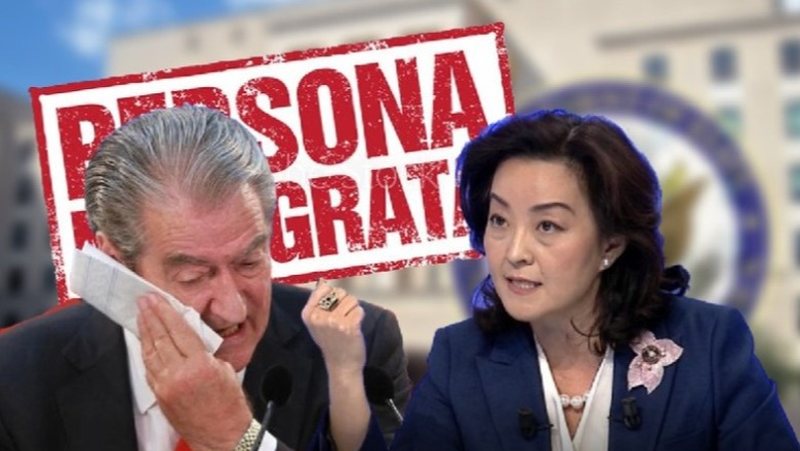
The Time Paradox: Did Time Prove Yuri Kim Right?

2026-06-16 10:11:19 / IDE
By Drin Kastrioti
In politics, the assessment of a decision or position is not only made at the moment it is articulated, but also in light of subsequent developments. This is why many statements that were considered unacceptable or unjust at the time can take on a different meaning when analyzed retrospectively.
When American diplomats Yuri Kim, Gabriel Escobar, and Philip Reeker demanded that the Democratic Party distance itself from the figure of Sali Berisha, a large part of the Democrats perceived this as interference in the internal affairs of the opposition.
The objections became even stronger after Ambassador Yuri Kim's public statements about BARI, which were interpreted as direct warnings to the Democratic Party if it did not follow this political course.
However, developments in recent days have created a new context for analyzing that moment. The current civic protests have produced a form of political anger that is not directed only against the government of Edi Rama, but against the entire political class that has dominated the Albanian transition.
In this sense, the main demand of a significant portion of the protesters is not simply the rotation of power, but the replacement of traditional political elites.
If the Democratic Party had made a clear separation from the figure of Sali Berisha at the moment it was asked to, it is possible that today it would have been the main beneficiary of this civic mobilization.
It could have been perceived as a reformed alternative and ready to channel the energy of protest towards institutional change.
But instead, the traditional opposition continues to bear the burden of identifying with the main figures of the transition. This has limited its ability to fully absorb popular discontent, because a significant portion of the protesters consider not only the current government, but also the historical opposition, to be part of the problem.
On the other hand, the protest itself remains in an embryonic stage of its political development. It has energy, mass and social legitimacy, but it does not yet have the organizational structure, leadership and program necessary to transform itself into an alternative government. Like many similar movements in history, it is in the phase of forming its political identity.
This means that the protest needs time to build its own institutions, produce representative figures, and gain the necessary capacity to compete with traditional parties. The process of transformation from a civic revolt to a political force is usually long and complex.
This is precisely where the difference lies with the hypothetical scenario of a reformed Democratic Party. If it had been positioned as a new alternative within the system, the political transition could have been faster and less institutionally costly. Civic anger would have found a ready political channel to be represented.
Ultimately, despite ongoing debates over the motives and manner of intervention by American diplomats, current developments suggest that their analysis of the need to renew the opposition may have had a stronger political basis than was thought at the time.
History never proves with certainty what would have happened on an alternative path, but it allows one to assess whether a missed opportunity could have produced a different outcome for the Albanian political system. /Alfapress.al
Happening now...














Attacks on Dumani and Berisha's silence on Ilir Shtufi
Nga Bato Kosova
ideas

The Time Paradox: Did Time Prove Yuri Kim Right?
Nga Drin Kastrioti

Rama and Berisha, the losing battle with the public
Nga Alfapress
Trash or Treasure?/ There are photographs that are worth as much as a story
Nga Albert Zadrima
top



Alfa recipes







services
- POLICE129
- STREET POLICE126
- AMBULANCE112
- FIREFIGHTER128