


Lajme flash
Depopulation as an argument for reform, half of the country's population lives in 7 municipalities

2026-08-25 09:33:00 / EKONOMI&SOCIALE

Albania is expected to go from 61 to 46 municipalities, through the consolidation of 28 existing municipalities into 13 larger units, a change that will eliminate 15 administrative apparatuses. This is the majority's proposal for the new administrative-territorial reform. Fiscal efficiency and cost reduction are among the main arguments of the draft law, but the report accompanying the initiative does not give an overall value in lek of how much the new map will save the budget.
According to the document, in territories that no longer have sufficient demographic and economic mass, fixed administration costs reach up to twice the average per capita. The elimination of 15 parallel apparatuses is expected, according to the drafters, to free up funds that can be shifted towards services and investments.
However, savings will not necessarily come from mass layoffs. The draft law provides that during the restructuring, priority will be given to reallocating personnel to territorial services, integrated counters and constituent city structures, instead of layoffs, while during the transition, the continuity of salaries and employment relationships is guaranteed.
The initiative was submitted to the Assembly by a group of deputies and is based on the report of the Special Parliamentary Committee for Administrative-Territorial Reform. According to the report, the 28 municipalities involved will be consolidated into 13 municipalities, reducing the national number to 46.
Small municipalities have twice the staff per inhabitant
According to the report, one of the strongest economic arguments for the reform is the difference in the cost of administration according to the size of the municipality. Small municipalities have an average of 26 municipal employees per 1,000 inhabitants, compared to 16 in medium-sized municipalities and only 13 in large municipalities. So, in relation to the population, the apparatus of small municipalities is about twice as large as that of large units.
At the same time, small units are less able to retain specialized staff and provide complex services. The report emphasizes that size is not the only factor determining efficiency, as fiscal autonomy, geographical location, human resources and clarity of competencies also affect.
42 municipalities do not cover even half of the functions
The problem is not just related to the number of employees. According to the analysis supporting the bill, municipalities fund and exercise on average only 15.8 out of 34 measurable functions, or 46.3% of them. In 42 municipalities, less than half of the functions are covered, while only five manage to cover 24 or more.
Diferenca sipas madhësisë është e dukshme: bashkitë me më pak se 10 mijë banorë mbulojnë mesatarisht 12,8 funksione, ndërsa ato me 50–150 mijë banorë arrijnë në 21,3. Raporti evidenton probleme në funksione si administrimi i pyjeve, ujitja dhe kullimi, arsimi parashkollor dhe mbrojtja nga zjarri.
47 bashki prodhojnë secila më pak se 1% të të ardhurave vendore
Argumenti tjetër është hendeku shumë i madh financiar mes bashkive. 47 bashki gjenerojnë secila më pak se 1% të të ardhurave të veta vendore në shkallë vendi, ndërsa Tirana e vetme realizon rreth 39% të totalit.
Sipas relacionit, një pjesë e konsiderueshme e njësive mbeten strukturalisht të varura nga transfertat e buxhetit qendror, çka kufizon autonominë e tyre financiare dhe mundësinë për të financuar funksionet që u cakton ligji.
Shqipëria ka 15,2% më pak banorë, gjysma jeton në vetëm shtatë bashki
Ndryshimet demografike janë një tjetër shtyllë e argumentimit për hartën e re. Censi 2023 regjistroi 2.402.113 banorë, 15,2% më pak se në vitin 2011, ndërsa mosha mesatare u rrit nga 35,3 në 42,5 vjeç dhe raporti i varësisë së të moshuarve pothuajse u dyfishua.
Në të njëjtën kohë, gati gjysma e popullsisë së vendit jeton tashmë në vetëm shtatë bashki, ndërsa një pjesë e zonave malore po përballen me plakje dhe tkurrje të vazhdueshme. Sipas relacionit, kjo do të thotë se baza demografike mbi të cilën u ndërtua harta territoriale e vitit 2014 ka ndryshuar ndjeshëm.
Bashkitë më të mëdha shihen si kusht për fondet e BE-së
Projektligji e lidh konsolidimin edhe me procesin e integrimit evropian. Relacioni argumenton se rreth 70% e legjislacionit të BE-së zbatohet në nivel vendor dhe se njësi me kapacitete më të mëdha administrative dhe teknike janë më të afta të përthithin fondet IPA dhe, në të ardhmen, fondet e kohezionit.
Sipas të njëjtit argumentim, bashkimi duhet t’u japë territoreve më të vogla akses në staf teknik, zyra projektesh, tregje dhe kapacitete investuese që ato nuk arrijnë t’i sigurojnë veçmas.
Ish-bashkitë mbeten “qytete”, por pa buxhet të veçantë
Harta e re nuk parashikon zhdukjen e emrave dhe njësive të brendshme të territoreve që bashkohen. Projektligji propozon strukturën Bashki – Qytet -Njësi Administrative, me gjithsej 71 qytete dhe 387 njësi administrative, ndërsa 20 bashki do të kenë më shumë se një qytet.
Ish-bashkitë që konsolidohen do të vazhdojnë si qytete përbërëse të bashkisë së re, me territorin dhe njësitë e tyre administrative, një nënkryetar të emëruar nga kryetari i bashkisë dhe përfaqësim proporcional në këshillin bashkiak. Por bashkia e zgjeruar do të mbetet njësia e vetme e vetëqeverisjes, me një kryetar, një këshill, një administratë dhe një buxhet.
Thus, the argument accompanying the reform is that fewer municipalities should mean more efficient administration, a larger financial base and higher capacity for services, while the structure of cities aims to maintain the representation of territories that lose the status of municipality. If the draft law is approved, the 2027 local elections will be held on the new map with 46 municipalities./ ekofin.al
Po ndodh...


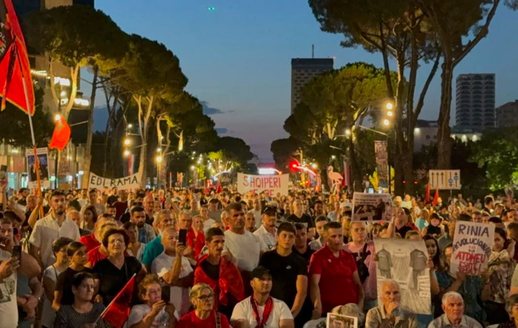




The power of vanity! The protest broke the "magic" of Rama and Berisha
Nga Indrit Gjyzeli
ide


top


receta Alfa


TRENDING 




shërbime
- POLICIA129
- POLICIA RRUGORE126
- URGJENCA112
- ZJARRFIKESJA128