


FLASH NEWS
Air, the invisible danger in Albania

2026-05-15 20:30:05 / AKTUALITET
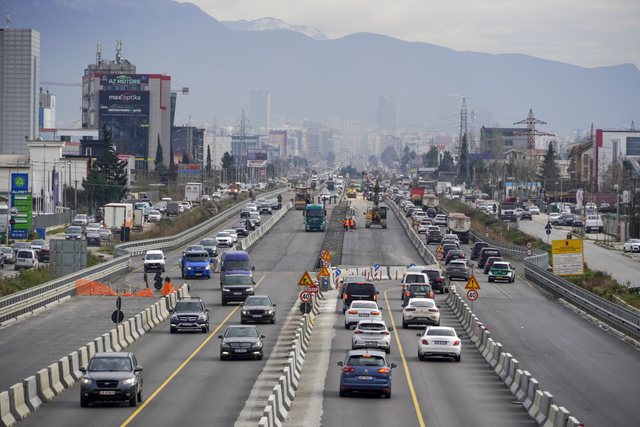
Air in Albania is no longer an environmental issue. It is an old story of neglect that repeats itself with the same protagonists: traffic, construction, institutions… and the lack of measurements. For eight years, state air measurement stations have been turned off and on again, turning monitoring into a failed process.
Albania has a national air monitoring network with 59 stations. A map that gives you the idea of a complete, extensive system, capable of showing in real time what we are breathing. But on the ground, the reality speaks differently. Monitoring is carried out in only 9 stations throughout the country. Four in Tirana. One each in Durrës, Shkodër, Elbasan, Fier and Korçë. The rest of the country has no air quality measurements.
The National Environment Agency, the institution responsible for measuring air quality, indirectly admits failure.
In a response to Faktoje, the institution states that the current network consists of stations that measure pollutants such as PM10, PM2.5, NO₂, SO₂, O₃ and CO, while "the stations are in operation, with the exception of one for technical reasons . "
But the problem is no longer just whether they are on or off. The problem is that there are few of them. Very few. A problem that has also been pointed out by the Supreme State Audit Office, which, through a recent audit, emphasizes that institutions "have not guaranteed reliable and sufficient data for assessing the real state of air quality . "
Albania that is measured and Albania that is not measured
In this institutional vacuum, another map has begun to be built, that of alternative measurements. On one side stands the National Environment Agency, the institution legally responsible for measuring air quality, with a limited network of stations and reports that present a relatively stable situation for most pollutants. According to the NEA, apart from seasonal increases in ozone in summer , “the situation for other pollutants appears to be stabilized”, while pollution exceedances are mainly related to traffic, construction and heating in winter.
On the other hand, a parallel system, set up by civil society, is trying to fill the gap that the state has left with a much clearer picture.
The CoPlan Habitat Development Institute, an organization that addresses environmental issues, through the GreenAL project, has installed hundreds of monitoring points in major cities.
The latest results leave no room for optimism and do not match the official narrative at all.
In Tirana, 66.7% of points exceed the norms for nitrogen dioxide, a pollutant directly related to traffic, while according to official data, these levels are generally reported to be within limits.
Në Durrës, 100% e pikave të monitorimit të Co-PLAN rezultojnë mbi standardet për grimcat e imëta PM2.5 dhe PM10, ndërsa Agjencia flet për një situatë pa rritje të konsiderueshme për shumicën e ndotësve.
Në Elbasan, kontrasti bëhet edhe më i dukshëm. Ndërsa matjet alternative tregojnë se 91% e pikave tejkalojnë kufirin për NO₂, raportimet zyrtare nuk evidentojnë një situatë alarmante për këtë ndotës. E njëjta tablo përsëritet në Fier, ku deri në 79% e pikave janë mbi normë për grimcat e pluhurit, dhe në qytete si Korça dhe Shkodra, ku më shumë se gjysma e pikave rezultojnë mbi standardet.
Pra, teksa Agjencia Kombëtare e Mjedisit flet për një situatë përgjithësisht të qendrueshme me tejkalime të kufizuara, matjet e Co -Plan në terren tregojnë se ndotja është e përhapur, e vazhdueshme dhe mbi normat e lejuara.
Nuk ka mister në këtë histori. Asnjë ndotës i padukshëm që nuk mund të identifikohet. Vetë Agjencia Kombëtare e Mjedisit pranon për Faktoje se “kontribuesit kryesorë të ndotjes së ajrit janë trafiku i rënduar dhe ndërtimi”, ndërsa në dimër shtohet edhe ndotja nga përdorimi i lëndëve djegëse për ngrohje.
Në disa qytete, lista zgjatet. Industria në Elbasan, Fier dhe Tiranë vazhdon të jetë një faktor i rëndësishëm. Por mbi të gjitha qëndron trafiku. Sipas të dhënave të Drejtorisë së Përgjithshme të Shërbimeve të Transportit Rrugor, në vitin 2025 numri i mjeteve në qarkullim në vend e kaloi për herë të parë shifrën 1 milion.
Edhe dy muajt e parë të vitit 2026 konfirmojnë të njëjtin trend, me rreth 14 mijë mjete të importuara dhe një rritje prej 5%.
Por problemi nuk është vetëm numri. Është cilësia e flotës. Rreth 69% e automjeteve në Shqipëri funksionojnë me naftë, ndërsa mosha mesatare makinave ka arritur në 18 vite.
Kontrolli i Lartë i Shtetit e përshkruan këtë si një tendencë shqetësuese, duke theksuar se “është rritur numri i mjeteve me moshë mbi 20 vjet”, një faktor që ndikon drejtpërdrejt në ndotjen e ajrit, sidomos në zonat urbane. Në këtë panoramë, mjetet elektrike mbeten pothuajse të padukshme, vetëm 1.3% e totalit.
Në sfondin e trafikut, një tjetër burim ndotjeje është rritur ndjeshëm vitet e fundit ndërtimi. Sipas të dhënave të INSTAT, të përllogaritura nga Faktoje, në pesë vitet e fundit janë dhënë rreth 7 mijë leje ndërtimi në të gjithë vendin. Çdo kantier sjell pluhur, lëvizje mjetesh të rënda dhe zhdukje të hapësirave të gjelbra elementë që jo vetëm rrisin ndotjen, por edhe e bëjnë atë më të qëndrueshme në kohë.
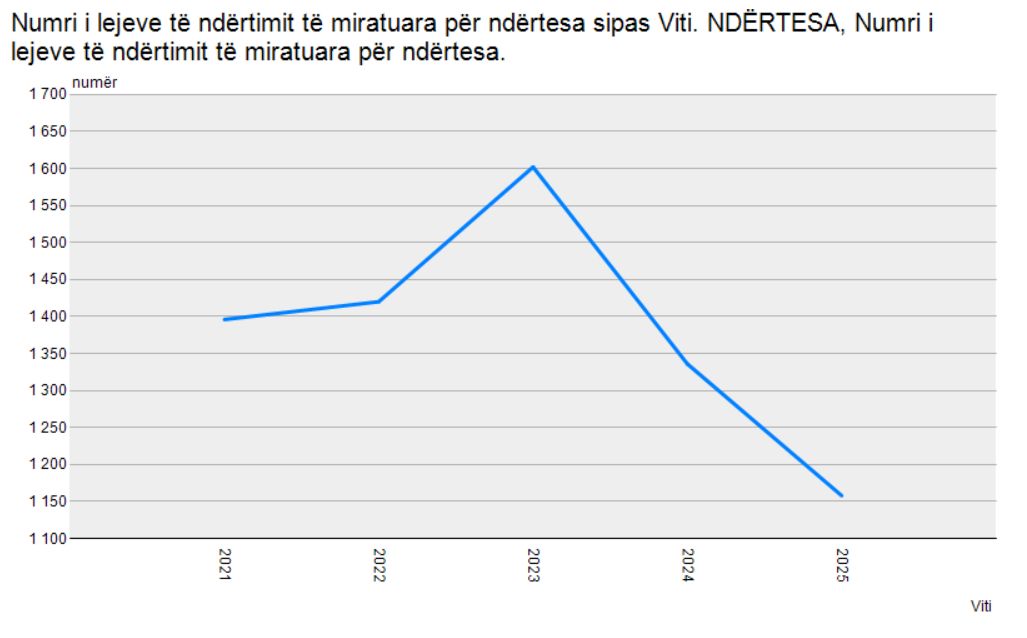
E ndërsa qeveria shpenzon miliarda lekë për investime, ajri që qytetarët thithin ka një buxhet minimal për t’u matur.
A short while ago, the Minister of Environment, Sofjan Jaupaj, stated that “the Ministry of Environment has also committed its budget this year and in the next two years to equip Albania with all the equipment for air quality monitoring.” But although in official documents, environmental protection appears as a priority, funds for improving air quality are scarce, as part of the Environmental Protection Program.
For 2026, the funds amount to about 1 billion lek. But this is a budget that must also cover waste, biodiversity, climate change and water. Air remains a small part of this pie. In fact, budget analysis of recent years shows that every time the budget is revised, this item suffers cuts.
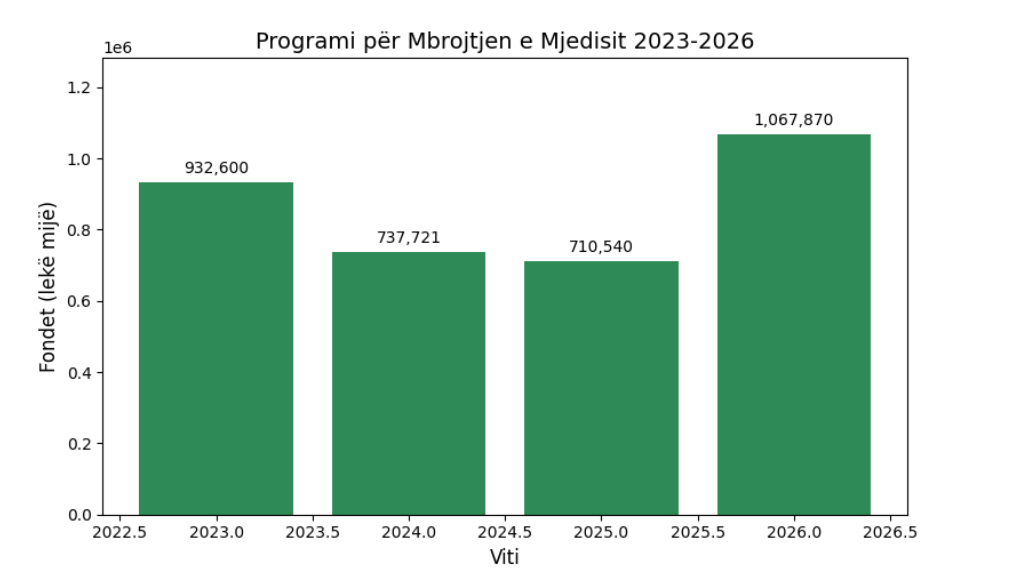
This reduction occurs through normative acts, which in practice further shrink funding for a sector that already operates with minimal resources. Therefore, the result is visible on the ground, a limited monitoring network, equipment that often fails, and a lack of continuous data.
Albania has an air quality plan. A document that talks about reducing traffic, improving public transport, promoting clean technologies. But in practice, these remain general formulations. The Supreme State Audit notes that the measures are “ not clear and not easily measurable.” There are no concrete objectives.
Meanwhile, the country has a clear obligation. European Union Directive 2008/50 requires continuous monitoring and publication of real-time data on air quality. Without this, the country risks not only the health of its citizens, but also the European integration process.
And the solutions are. The Supreme State Audit emphasizes that the National Environmental Agency must ensure the uninterrupted operation of monitoring stations, with regular maintenance and calibration. The Ministry of Tourism and Environment must guarantee funds for the expansion of the measuring network. And above all, citizens must have access to updated and reliable data. Because air is not a statistic. It is what we breathe every day. And for this, no one can wait./ Esmeralda Topi, Faktoje.al
Happening now...







Molotov cocktail on Saturday, shopping on Thursday!
Nga Bato Kosova
ideas



top











services
- POLICE129
- STREET POLICE126
- AMBULANCE112
- FIREFIGHTER128