


FLASH NEWS
Iran attacks raise alert level in Europe

2026-03-23 20:21:52 / BOTA
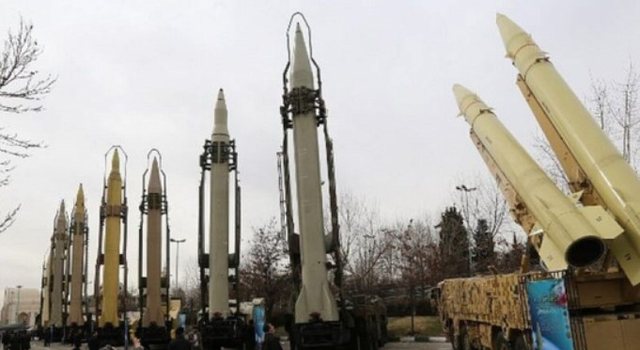
European countries have tried to avoid getting deeply involved in the US and Israel's war against Iran, which has now entered its fourth week.
They have considered the possibility of helping to unblock the Strait of Hormuz, but have stressed that such action would only be taken after a ceasefire and – possibly – with a mandate from the United Nations.
But on March 21, the threat became more apparent, when Iran demonstrated that its missiles have the potential to reach European cities.
Tehran launched two ballistic missiles towards Diego Garcia – a joint US-British base in the Indian Ocean, about 4,000 kilometres from Iranian territory – and officials in Brussels and beyond began to take the situation more seriously.
Previously, Iran – under the rule of the late supreme leader, Ayatollah Ali Khamenei – had maintained a limit on the range of ballistic missiles at 2,000 kilometers.
Khamenei was killed in a US-Israeli strike on Iran on February 28. And that border now appears to no longer exist – which has increased concern in Europe.
Brussels is already engaged in a more immediate war: Russia's full-scale invasion of Ukraine, now in its fifth year. So far, the bloc has allocated over 70 billion euros in military aid to Ukraine.
"This is for us a new dimension of the war [with Iran]," says a senior EU official, speaking to Radio Free Europe on condition of anonymity.
"Let's be honest - our air defense is quite depleted right now," he said.
Many European countries have contributed to Kiev's air defense, but they have also realized that there are significant gaps in the continent's air defense – if it were ever to be tested.
While possessing high-quality technology, such as Patriot missiles, SAMP/T and IRIS-T missile systems, some European defense ministries openly admit that they have significant shortages in interceptors.
Europe would also face difficulties with so-called "saturation" attacks, used by Russia in Ukraine, where air defense systems are overwhelmed by a wave of attacks that include electronic interference, cyberattacks, drones and various types of missiles.
The continent still remains heavily dependent on the United States for long-range coverage, and this is where Iran's potential threat to Europe comes into play.
Commenting on the attacks on Diego Garcia, Israeli army chief Eyal Zamir stressed that "these missiles are not intended to hit Israel. Their range reaches European capitals; Berlin, Paris and Rome are all within direct range of threat."
Israel-based independent defense expert Michael Horowitz told Radio Free Europe on March 21 that "Iran can no longer be seen as a threat limited to the Middle East. It is building capabilities that are intended to raise costs even for more distant adversaries."
"If I were European, I would be worried," he said.
British Cabinet Minister Steve Reed said on March 22 that a missile launched towards Diego Garcia "fell short of its destination", while another missile was "intercepted".
He also dismissed Israeli claims that Europe could be a target, adding that "there has been no assessment that supports the claims that Iran is planning to strike European cities with ballistic missiles, or has the capacity to do so."
Iranian drones have so far been intercepted over British military bases in Cyprus, while Turkey – a NATO member – intercepted three ballistic missiles on separate occasions in early March.
NATO did not provide new comments to Radio Free Europe following the attacks on Diego Garcia, but referred to its statement on cases in which Turkey successfully intercepted attacks.
"NATO's BMD (Ballistic Missile Defense) has been effective against Iranian missiles in Turkey - which is exactly what it was designed to do," Oana Lungescu, a former NATO spokeswoman and currently a fellow at the Royal United Services Institute for Defense and Security Studies, told Radio Free Europe.
A NATO official, speaking to Radio Free Europe on condition of anonymity, also noted that NATO's BMD was designed specifically to counter Iranian missiles - not necessarily Russian ones - when it was built in the early 2000s and became operational in 2012.
Germany has its command center at its Ramstein Air Base, while current missile defense is located at Polish and Romanian bases.
Turkey has a radar and Spain has four BMD-capable ships at its naval base, Rota.
However, NATO BMD has a significant US footprint that makes Europe dependent on American military defense.
Robert Pszczel – a former NATO official and current security expert at the Warsaw-based Center for Eastern Studies – tells Radio Free Europe that “the current assumption is that the system is operational and doing exactly what it is supposed to do.”
"Of course, it is a special system with important elements provided by the US," says Pszczel./REL
Happening now...




Digital education, how to help students think critically in the age of social media
Mirela Çërraga Karabina










ideas



top



Alfa recipes



TRENDING 




services
- POLICE129
- STREET POLICE126
- AMBULANCE112
- FIREFIGHTER128