


FLASH NEWS
German Chancellor Merz warns: Iranian leadership is in its last days

2026-01-13 21:41:34 / BOTA
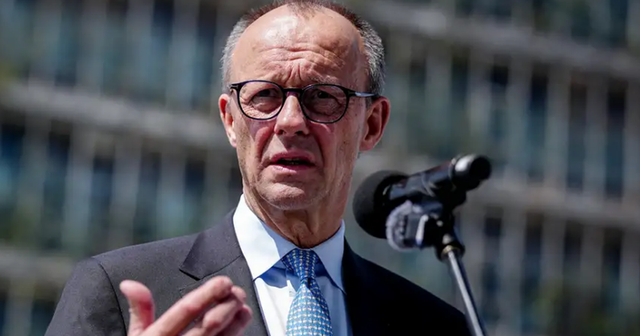
These are the "last days and weeks": in the face of ongoing protests in Iran, Chancellor Merz sees the Iranian leadership at the end. Foreign Minister Wadephul calls for tougher sanctions against Tehran.
In the face of mass protests in Iran, German Chancellor Friedrich Merz predicts, in his own words, an imminent end to the country's state leadership. "When a regime can only hold on to power through violence, then it has effectively come to an end. I suppose we are now looking at the last days and weeks of this regime," the CDU politician said during a visit to India.
Merz had already condemned the violence by Iranian security forces against peaceful demonstrators on Monday as "excessive" and "brutal." "I call on the Iranian leadership to protect its people instead of threatening them," he said. Merz explicitly praised the courage of the demonstrators. They were peacefully demanding freedom in their country, and they had every right to do so.
Wadephul in favor of tougher sanctions against Iran
Foreign Minister Johann Wadephul also sharply criticized the Iranian leadership. Iran is an "unjust regime" with no legitimacy among the people, which uses means "that violate all norms of humanity" against its own population, the CDU politician said. After a meeting with US Secretary of State Marco Rubio in Washington, he called for tougher measures against the leaders in Tehran.
Wadephul announced that the federal government would seek to extend sanctions against the Iranian government. This includes adding it to the EU's anti-terrorism sanctions list. So far, this has not been possible because unanimity is required.
Moreover, the international community must collectively make clear that it stands in solidarity with the Iranian people, Wadephul said. He and Rubio agreed on this point. Germany and the United States want to work towards a joint statement from the G7 countries. For more than two weeks, Iranians have been protesting against the authoritarian system of government. The protests, fueled by an economic crisis, have now taken on a national dimension. Security forces are responding with brutal force. These are the most serious protests in Iran in years.
Activists estimate that around 650 people have been killed.
The Oslo-based Iran Human Rights NGO (IHRNGO) puts the death toll since the protests erupted in late December at at least 648. The US-based Human Rights Network, HRANA, also reported nearly 650 deaths. This includes 505 protesters, nine of whom were children, as well as 133 military and police personnel. Some estimates put the number of people killed at more than 6,000, as reported by IHRNGO on its X platform. Some estimates put the number of arrests at over 10,000. It is currently not possible to independently verify these figures, partly due to the ongoing internet and telecommunications blackouts./ DW
Happening now...




Germany, the "curse" of Rama and Berisha
Nga Bato Kosova
ideas

The opposition must and will be bigger than an individual.
Nga Taulanda Jupi

Violent protests as group therapy
Nga Roland Lami

Those who mocked and attacked Basha
Nga Ermal Peçi
top


Alfa recipes



TRENDING 




services
- POLICE129
- STREET POLICE126
- AMBULANCE112
- FIREFIGHTER128