


FLASH NEWS
Tens of thousands killed and missing/ War in Kosovo, today marks the 27th anniversary of NATO bombing against Serbia

2026-03-24 08:30:56 / KOSOVA
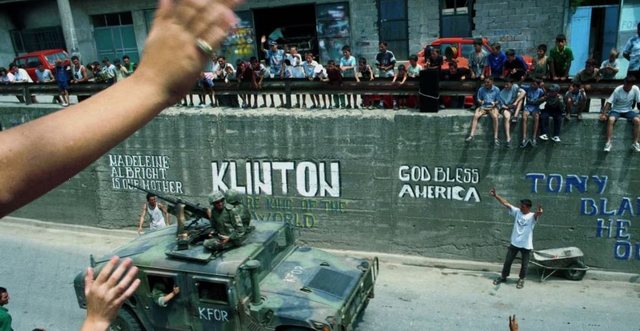
Today marks the 27th anniversary of the start of NATO bombing of Serbian military and police targets in the former Yugoslavia to stop the violence of Serbian forces against Albanians in Kosovo.
The bombings began on March 24, 1999, and lasted 78 days. They began after failed attempts by the international community to convince former Serbian leader Slobodan Milosevic to agree to a ceasefire.
"If [Yugoslav President Slobodan] Milosevic is not willing to make peace, we are willing to limit his ability to wage war against the Kosovars," said then-US President Bill Clinton.
Then, it was NATO Secretary General Javier Solana who authorized the airstrikes.
This campaign marked the first time that NATO used military force without the approval of the United Nations Security Council.
The campaign involved about 1,000 aircraft operating from air bases in Italy and Germany, as well as the aircraft carrier stationed in the Adriatic Sea, the USS Theodore Roosevelt.
The aircraft flew over 38,000 sorties – 10,484 of which were attack sorties – without any Allied fatalities.
During the air campaign, barracks and military units in Serbia, Montenegro and Kosovo were destroyed or severely damaged, as were command and control systems, air defence systems, energy and communications infrastructure, etc.
At the end of the campaign, President Clinton said that the demands of the international community had been met, including: the withdrawal of Serbian forces from Kosovo, the deployment of a NATO-led security force, and the return of Kosovars to their homes.
“I can report to the American people that we have won – for a safer world, for our democratic values, and for a stronger America.”
The bombings stopped the day after the signing of the Kumanovo Agreement.
With this agreement, negotiated between NATO and Yugoslav military officials, Yugoslav forces were withdrawn from Kosovo and an international peacekeeping force, led by NATO, was established.
Belgrade had 11 days to move its 40,000 security forces out of Kosovo.
KFOR, the NATO-led peacekeeping mission, began deployment on June 12, 1999. Initially consisting of around 50,000 troops, it has grown to 4,767 troops today, from 33 countries around the world.
The war ended with about 13,000 people killed; thousands missing – over 1,600 of whom still remain unaccounted for; hundreds of thousands of refugees – most of whom returned; and thousands of properties damaged or destroyed.
Happening now...










ideas


top


Alfa recipes



TRENDING 



services
- POLICE129
- STREET POLICE126
- AMBULANCE112
- FIREFIGHTER128