


FLASH NEWS
Is the US talking to Iran's Mohammad Bagher Ghalibaf, and who is he?

2026-03-24 19:44:13 / BOTA
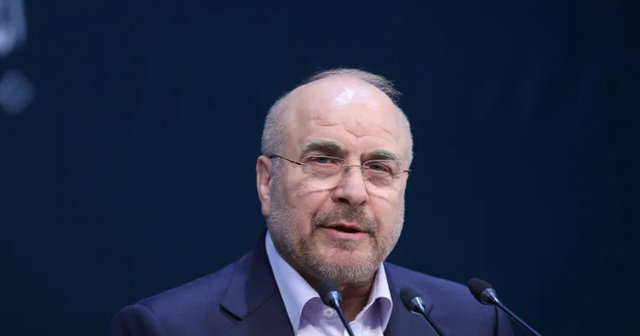
Iranian leaders, including Ghalibaf, have denied that talks with the U.S. are taking place. U.S. President Donald Trump announced on Monday that he would halt attacks on Iran's energy infrastructure for five days and said Washington and Tehran had had "very good and productive talks" aimed at ending the war.
On the same day, Trump told reporters that his envoys were speaking with a senior Iranian official. While Trump did not name the official, several media outlets in Israel and the US reported that the special envoys, Steve Witkoff and Jared Kushner, Trump's son-in-law, were speaking with the Speaker of the Iranian Parliament, Mohammad Bagher Ghalibaf.
Both the Iranian government and Ghalibaf have denied that talks are taking place between Washington and Tehran. Under the Iranian system, any negotiations with the US would have to be approved by the new Supreme Leader, Mojtaba Khamenei, and the Supreme National Security Council to have legitimacy.
Who is Ghalibaf and what do we know about these alleged talks?
Ghalibaf, 64, is the speaker of Iran's parliament. He served as commander of the Islamic Revolutionary Guard Corps (IRGC) air force from 1997 to 2000. After that, he served as the country's police chief. From 2005 to 2017, he was mayor of Tehran.
Ghalibaf ran in the presidential elections in 2005, 2013, 2017 and 2024. He withdrew his candidacy for president before the 2017 elections.
In May 2020, Ghalibaf became Speaker of Parliament, replacing Ali Larijani, who had held the post since 2008. Larijani was a close advisor to the previous Supreme Leader, Ali Khamenei, who was assassinated on the first day of the US-Israeli war on February 28. Larijani, also one of Iran's top security officials, was killed on March 17 in an Israeli strike.
What has Ghalibaf said during the war?
In his online posts, Ghalibaf has been among the harshest critics of the US and Israel and has repeatedly threatened Israel, the US and the Gulf states. Those threats have often followed warnings from the IRGC, but have occasionally gone further than what the military itself has threatened to do.
On March 14, he mocked Trump for claiming that the US had defeated Iran. Three days later, he declared that the Strait of Hormuz would not return to its pre-war state. Then, on Sunday, Ghalibaf wrote that financial institutions that fund the US military are legitimate targets for Iran: “US Treasury bonds are soaked in the blood of Iranians.”
And on Monday, Ghalibaf posted a series of tweets on X, denying that talks with the US were taking place. “The Iranian people demand the full and remorseful punishment of the aggressors,” he wrote. “All Iranian officials stand firmly behind their supreme leader and the people until this goal is achieved.”
On Saturday, Trump gave Iran a 48-hour ultimatum to reopen the key shipping route through the Strait of Hormuz or risk US strikes on Iranian power plants. In response, Iran said it would attack energy and water facilities in Israel and the Persian Gulf. Ghalibaf also threatened companies that hold US Treasury bonds.
Then, on Monday, Trump wrote in a post on Truth Social that the U.S. and Iran had had “very good and productive talks regarding a full and comprehensive resolution of our hostilities in the Middle East.” He ordered U.S. forces to halt attacks on Iranian power plants for five days. The Iranian Foreign Ministry rejected Trump’s claim that talks were taking place. Iranian officials accused Trump of halting the threatened attacks only to calm energy markets.
Media reported on Monday that Trump said his envoys were in contact with a senior Iranian official.
“We’re dealing with a man who I believe is the most respected, not the supreme leader. We haven’t heard from him,” Trump told reporters on Monday. Trump said he didn’t want to name the Iranian leader so as not to put him at risk, but several U.S. news outlets, including Axios and Politico, and several Israeli publications have reported that Witkoff and Kushner have been in contact with Ghalibaf.
However, on Monday, Ghalibaf wrote in a post on X: "No talks have taken place with the US, and fake news is being used to manipulate financial and oil markets and escape the quagmire in which the US and Israel are caught."
Happening now...






ideas


top


Alfa recipes



TRENDING 




services
- POLICE129
- STREET POLICE126
- AMBULANCE112
- FIREFIGHTER128