


FLASH NEWS
Havana receives $100 million in aid, Rubio: US is focused on changing policy in Cuba

2026-05-21 20:01:42 / BOTA
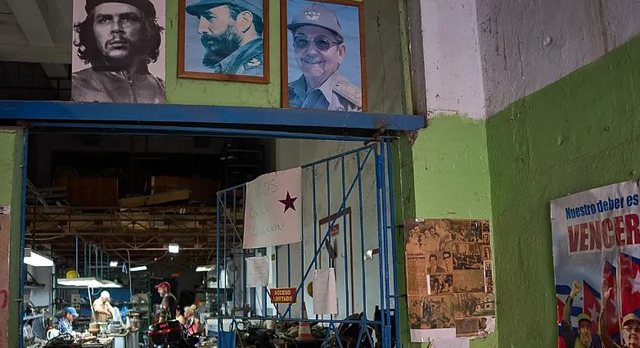
Secretary of State Marco Rubio warned Cuba on Thursday that the United States was focused on rapidly changing the communist system, after the island was rocked by a U.S. indictment of its former president Raul Castro.
Rubio, a Cuban-American and vocal opponent of the Havana government, described the island 145 kilometers off the US coast as a "failed state" as it suffers from a major economic crisis.
"Their economic system doesn't work. It's broken and you can't fix it with the current political system that's in place," Rubio told reporters in Miami.
"What they've been used to all these years is just buying time and waiting for us to finish. They won't be able to wait for us or buy time. We're very serious. We're very focused."
Rubio said the US preference was "always a diplomatic solution", but warned that Trump had other options to address perceived threats.
"Cuba has always posed a threat to the national security of the United States," Rubio said, pointing to the presence of Russian and Chinese weapons and intelligence on the island.
Rubio also said that Cuba had dutifully accepted an offer from the United States of $100 million in aid in exchange for reforms.
But he said it was unclear whether the United States would accept Cuba's terms, as Washington insists on bypassing the military-backed enterprise that dominates the island's economy.
The US military announced that the aircraft carrier USS Nimitz and its accompanying warships had entered the Caribbean, although President Donald Trump, when asked
The charges against Raul Castro, the younger brother of Fidel Castro, the late iconic US foe who led Cuba's communist revolution that culminated in 1959, stem from the deadly downing of two civilian airliners flown by anti-Castro pilots in 1996.
Cuban authorities called on citizens to protest the "disgusting" indictment, with the official newspaper Granma calling on Cubans to gather outside the US embassy in Havana on Friday morning.
"This is not really an accusation, something from more than 30 years ago, but rather a public attack on a public figure," Fabian Fernandez, a 30-year-old accountant, told AFP news agency.
"It's a matter of politics and public image," he added.
In January, Trump exploited a domestic US lawsuit against Venezuela's leftist leader, Nicolás Maduro, to send US forces to oust him from office and arrest him.
“The idea is to say, we can do to you what we did to Nicolás Maduro,” said Christopher Sabatini, senior fellow for Latin America at Chatham House.
“The military would certainly defend Cuba,” Sabatini said of the US military intervention. “Whether the people would or not, it’s hard to say.”
Operation Maduro led to the end of free oil from Venezuela to Cuba, which relied on its ally for nearly half of its needs.
Cubans have suffered from power outages of up to 20 hours a day and running taps.
Uncontrolled inflation has caused the prices of basic goods to rise and mountains of garbage have piled up on the streets of Havana.
Pedro Leal, a 65-year-old retiree, accused Washington of harming ordinary Cubans.
"What the US government is doing here right now, in addition to the energy blockade that prevents us from bringing in fuel, frankly, is criminal," he said.
In addition to murder, Castro has been accused of conspiring to kill Americans and destroying aircraft.
The Cuban government called the downing of the plane in 1996 "legitimate self-defense" against a violation of airspace.
China and Russia criticized Trump's moves toward Cuba, which come as he tries to end an unpopular war he started with Israel against Iran.
China said it "strongly supports" Cuba and urged the United States to reduce tensions.
Chinese Foreign Ministry spokesman Guo Jiakun said at a press conference that Washington "should stop waving sanctions and judicial measures against Cuba and stop threatening with force at every turn."
In Moscow, Kremlin spokesman Dmitry Peskov said: "We believe that under no circumstances should such methods, which border on violence, be used against former or current heads of state."
Happening now...



Molotov cocktail on Saturday, shopping on Thursday!
Nga Bato Kosova
ideas



top



Alfa recipes







services
- POLICE129
- STREET POLICE126
- AMBULANCE112
- FIREFIGHTER128