


FLASH NEWS
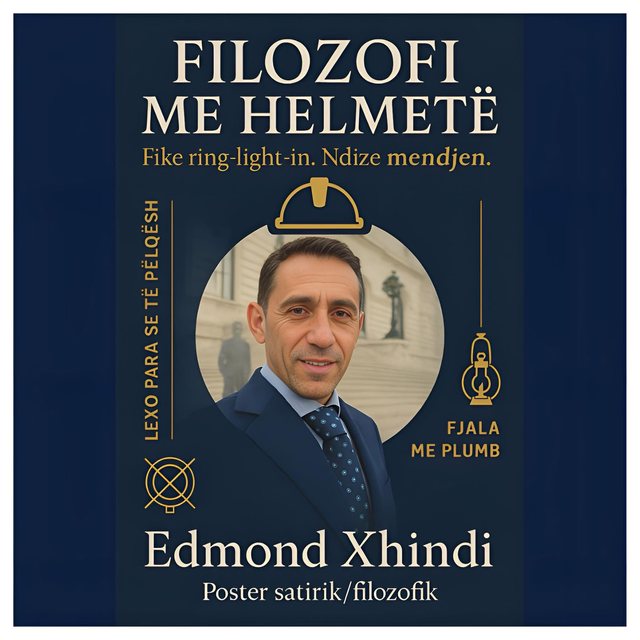
Lapaj's chair protest and the Helmeted Philosopher!

2025-12-10 18:50:32 / IDE
Today I saw the chair protest in front of the Prime Minister's Office.
Big words, multiple statuses, big headlines, photos from above.
Below, a row of plastic chairs. The seated revolution.
The new school of civil bravery, you sit down, position yourself nicely for the camera, wait for the drone, issue a status, call this "resistance."
Diogenes slept in a barrel, Lapaj sits on a plastic chair in front of the Prime Minister's Office.
Each generation has its own favorite furniture.
I am Edmond from the shipyard.
During the day I carry bricks and tiles, in the evening I pick up the Facebook keyboard.
The helmet stays on my head, the other helmet stays in my mind.
From the heights of the pier I can see both worlds clearly, the concrete that holds the weight and the plastic that holds the pose.
The plastic chair belongs to the era of great fatigue and little courage.
People are tired of injustice, prices, oligarchs, endless disappointments.
Courage comes packaged in an "event" format.
Two hours sitting, two heavy words, two long statuses.
Strong profile picture.
Mission accomplished.
This is where Lapaj, the main director of the chair liturgy, enters the scene.
The chair becomes a political act, the stage takes the form of experimental theater.
Hannah Arendt spoke of "public space" as a place where one risks oneself, one's name, one's reputation for the truth.
We find the public space of our century, the sidewalk of the Prime Minister's Office with chairs lined up like in a neighborhood bar.
Socrates would go out into the agora, surrounded by young people hungry for the truth.
Kierkegaard spoke of "throwing faith" from the edge of the inner abyss.
Camus called revolt an act of dignity.
Lapaj places the chair in front of the government building door and brings a thermos of coffee with him.
The spirit of revolt tastes like a long espresso, without sugar, with lots of photographers around.
This show demands an answer.
So today, on this December 10th, Youth Day, the Helmeted Philosopher announces his own protest:
Protest with ladder, plumb line and helmet.
I, Edmond Xhindi, a construction worker, appear before the Presidency with a construction ladder on my back, a helmet on my head, and a plumb line in my hand, as the only sign of justice we know on the construction site.
The ladder shows that every rise requires risk. The plumb line shows that every justice requires a vertical line that does not bend according to interest. The helmet shows that blows come from above, not from the next comment on Facebook.
People call to my mind:
"Edmond Xindi eats you, you too come out to protest, be a real philosopher, leave the construction site!"
I'm at the protest every day, just without a camera.
When you see your salary shrinking, you don't announce "live".
When you carry the bags on your back, no one comes to film you from above.
The construction site is a silent protest that hangs over every unauthorized pier, every long workday, every worker who does the math in his head before getting bread for the children.
Lapaj shpall protestë me karrige.
Një karrige për çdo padrejtësi.
Një karrige për çdo premtim që mbeti status.
Një karrige për çdo dosje që ngec në korridore.
Spektakli duket heroik nga larg.
Nga afër vërehet se gjithçka është e menduar për kamerën.
Karrigia ofron foto të bukur, profil qendrestari, viktimë të rehatshme.
Njeriu i ulur nuk lëviz, qëndron i fokusuar, del mirë në kuadër.
Revolucioni i ulur fiton gjithmonë në Instagram Stories.
Tani imagjino një tjetër skenë.
Edmondi para Presidencës me shkallë.
Jo rresht i gjatë karrigesh, veç një shkallë e madhe ndërtimi, e mbështetur si pirg pranie të vërtetë.
Çdo shkallë simbolizon një hap që kërkon mund, rrezik, djersë.
Lartësitë që s’të falin lëshim gjuri poshtë.
Nga poshtë, komentuesit shohin:
“Edmond, zbrit, se bie!”
Nga lart, unë shoh të njëjtin popull që ulur para ekraneve, shikon protestën e karrigeve dhe thotë:
“Hajde djem, të gjithë të guximshëm, veç askush mos na prishë rehatinë.”
Lapaj luan kartën e “të mos ulurit”.
Në fakt gjithë loja qëndron te të ulurit.
Karrigia plastike është metafizika e komoditetit, s’do përgjakje shkalle, s’do skelë të lartë, s’do helmetë të vërtetë.
Mjafton zhurma.
Zhurma rrit ndjekësit, ndjekësit ushqejnë egon, egoja e merr formën e liderit.
Tocqueville do të shihte te kjo skenë një demokraci ku qytetarët preferojnë spektaklin ndaj përfshirjes.
Foucault do të shihte një trup të ulur që i nënshtrohet pushtetit duke e imituar.
Arendt do të tundte kokën para karriges së palëvizshme, me bindjen se politika kthehet në teatër sapo trupi harron rrezikun.
Në këtë pikë, Filozofi me Helmete kthehet në qendër të skenës.
Unë jam punëtor, më trajtojnë si “njeri të thjeshtë”.
Nga kjo thjeshtësi lind një e vërtetë që djeg më shumë se çdo fjalim:
Mediokriteti i dashuron protestat me karrige.
Karrigia i thotë turmës:
“Je i revoltuar, me shpirt të madh, e megjithatë ke të drejtë të mos lëvizësh shumë.”
E madhja e vërtetë vjen gjithnjë në këmbë, lodhet, rrëzohet, rimerret, paguan kosto.
E madhja prej plastike vjen me karrige, pale të lehta, shirit sigurie dhe dron sipër që sjell pamje heroike.
Për këtë arsye, protesta ime me shkallë, plumbçe dhe helmeta s’ka gjasa të marrë kaq shumë klikime.
Shkalla s’ka glamour.
Plumbçja s’ka filtër.
Helmeta e punëtorit nuk përkthehet lehtë në “story”.
Gjithsesi, të tre këto sende mbajnë, në heshtje, një filozofi më të rreptë se çdo fjalim.
Shkalla të kujton se lartësia kërkon rrezik.
Plumbçja të kujton se drejtësia që lakon vijën për interesa hallakate çdo mur, çdo sistem, çdo shtet.
Helmeta të kujton se në këtë botë diçka bie gjithmonë nga lart, e godet kokën e atij që rrallë del në ekran.
Lapaj rri ulur në karrige dhe flet në mikrofon.
Unë imagjinoj një ditë ku kryeqyteti sheh një tjetër protestë:
Një rresht të gjatë shkallësh, të sjella nga kantieret, nga fshatrat, nga qytetet.
Çdo shkallë mban emrin e një familjeje që s’ka më durim për fasada.
Somewhere among them, an Edmond with a helmet on his head and a simple banner:
"Words without sacrifice, chairs without responsibility, leaders without cost, all end up in the dustbin of history."
Until that day comes, the Helmeted Philosopher looks down on the chair protest and leaves this sentence to history:
Each generation chooses its own means of resistance.
There are eras with crosses, with stones, with books, with chains.
Our time created the plastic chair.
The sedentary revolution awaits a leader who knows how to finally stand up.
Edmond Xhindi
The Philosopher with the Helmet
Happening now...




The revolution is over, Edi Rama continues calmly
Nga Bato Kosova
ideas


The great loneliness of the West and liberal democracy
Nga The Economist

Corruption money is buying political time.
Nga Taulanda Jupi
top



TRENDING 




services
- POLICE129
- STREET POLICE126
- AMBULANCE112
- FIREFIGHTER128