


Lajme flash
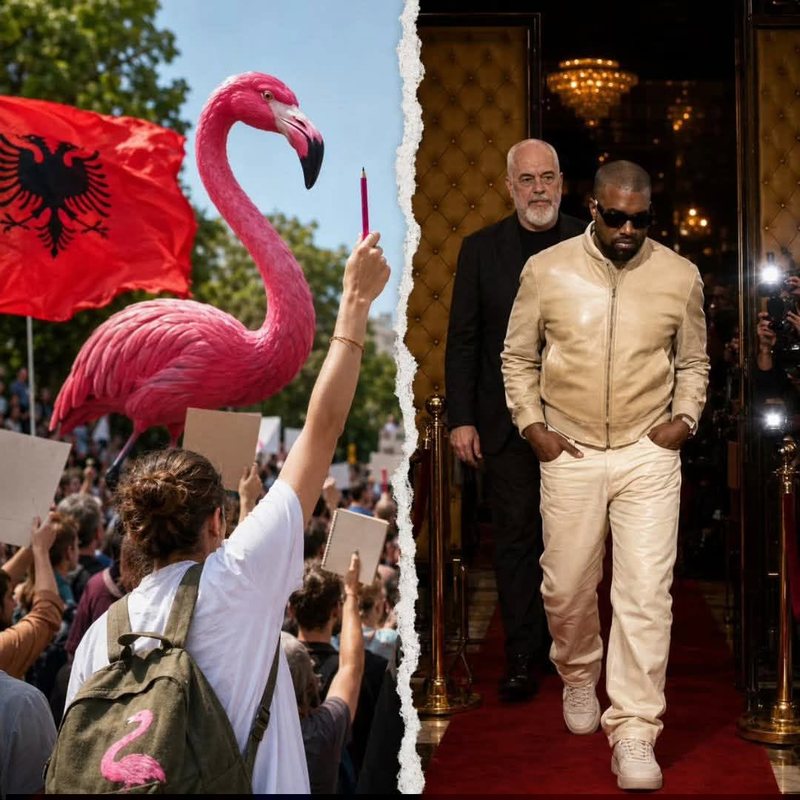
Kanye West and the moment when protest broke the narrative monopoly

2026-07-12 11:16:48 / IDE
By Red Varaku
The real problem facing the government today is not the protest itself, but the fact that the protest is challenging the monopoly of narrative.
Every political elite does not govern only with institutions, laws or force. It also governs through a story that it tells citizens every day. A story that is repeated in press conferences, on television, on portals and on social networks. A story that aims to convince society that everything is under control, that the country is moving in the right direction and that any criticism is unfounded or politically motivated by the 'ravens and crows' of the opposition.
This is why control over the narrative is as important as control over power.
But as is well known, every monopoly has a limit. It is broken the moment another story emerges on the scene, which can no longer be ignored.
This is what is happening with the protest.
The story of the elite is simple, the economy is moving, investments are increasing, Albania is transforming and grievances are isolated. For this reason, the country is moving rapidly towards integration.
The story of the protesters is quite different. They say that behind the facade of success lies rampant corruption, state capture, criminal groups, injustice, privileges for a minority, and the loss of citizens' trust in institutions. Their improvement not only does not hinder integration, but helps it.
So they are not just opposing a particular decision or policy, they are opposing the very narrative on which the government has built its legitimacy.
It is here that history enters a new political phase.
Because when two narratives clash, the battle no longer takes place only in the square. It takes place in the minds and hearts of citizens. Every protest, every statement, every institutional reaction, every government decision becomes part of a competition to determine which story will be believed as the truth.
For example, the story of the four million euros that the government allocated for Kanye West's concert with the justification that this concert helps improve Albania's image by showing the world the great transformation that our country has undergone is being challenged by the narrative that the protests are showing, which is related to the corruption and irresponsibility with which citizens' money is spent, where instead of this money going to hospitals, schools or planes to put out fires, it goes to marketing the Prime Minister's image and consolidating his power.
The fierce battle between narratives was clearly evident last night when the entire government and the Socialist Party were committed to filling the seats at the concert and shamefully used this concert to attack the very narrative that has sparked the protests.
But at this point, no matter how it seems, propaganda is no longer enough. If an alternative narrative continues to survive and gain credibility, the monopoly of interpretation begins to collapse.
Political history shows that regimes and governments rarely fall because they lose physical control over territory. They begin to weaken when they lose control over how citizens interpret reality.
At a time when more and more people no longer believe the official story, the government is entering a new phase. It may still control the institutions, the administration, or the parliamentary majority, but it no longer controls the meaning of events.
And when a government loses its monopoly on narrative, it has lost its most powerful weapon, the ability to convince citizens that reality is what it says, not what they experience every day.
Po ndodh...


Rama's government no longer has enough Berisha!
Nga Indrit Gjyzeli
ide


top

Wall Street Journal: Gangsteri që ka futur në telashe dhëndrin e Trump me marrëveshjet në Shqipëri
Eliot Brown, Vladimir Karaj





TRENDING 




shërbime
- POLICIA129
- POLICIA RRUGORE126
- URGJENCA112
- ZJARRFIKESJA128